




- St. Paul’s rent control ordinance led to a sharp 79% drop in new apartment-building permits and a 6% decline in property values, causing developers and investors to pull back significantly.
- Minneapolis avoided rent control and instead revised zoning laws, sparking a construction boom and attracting new residents, though affordable housing remains limited.
- Both cities show the trade-offs of rent control versus supply-side reforms, with St. Paul facing a freeze in new development and Minneapolis struggling to meet the needs of lower-income renters.
A Tale of Two Policies
The Twin Cities offer a real-time experiment in housing policy: in 2022, St. Paul adopted one of the most aggressive rent control measures in the US capping rent hikes at 3% annually with no exceptions for inflation or vacancies. Meanwhile, Minneapolis opted to boost supply, eliminating single-family zoning and easing restrictions to spur development.
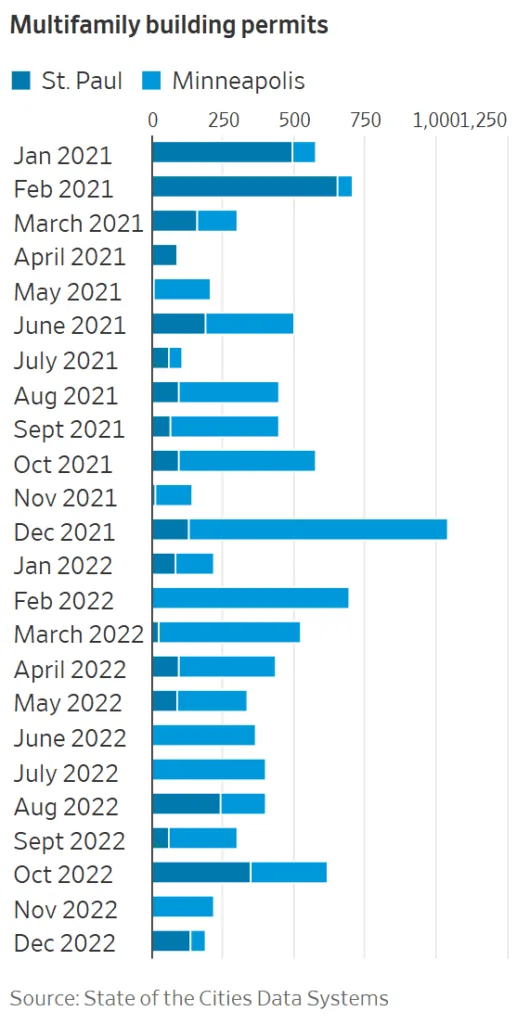
The impact was immediate, reports The WSJ. St. Paul saw a 79% decline in building permits, and real estate investment nearly halted. Developers like Ryan Cos. shelved major projects, citing a lack of lender confidence in rent-restricted returns.
Supply vs. Stability
While rent control aimed to protect tenants, the unintended consequence in St. Paul was a retreat from investment. One prominent example: the Highland Bridge development stalled, cutting 700 planned market-rate units and falling years behind schedule.
In contrast, Minneapolis quadrupled its permit activity in early 2022, thanks to a series of 2020 land-use reforms. The result: a vibrant downtown scene and increased housing options—mainly targeted at higher-income renters.
Rents, Politics, and People
Despite its development push, Minneapolis rents rose just 0.7% on average from 2022–2024, slower than both the national average (3.3%) and St. Paul (1.8%). Still, most new units cater to young professionals like 23-year-old Aria Burgess, who pays $2,200 for a luxury apartment.
However, affordability remains elusive for many. Eviction filings are up 68% in Minneapolis and 61% in St. Paul compared to pre-pandemic levels. While St. Paul’s rent control offered predictability, landlords like Alisa Lein are now forced to raise rents annually by the maximum, with no flexibility for long-term tenants.
Get Smarter about what matters in CRE
Stay ahead of trends in commercial real estate with CRE Daily – the free newsletter delivering everything you need to start your day in just 5-minutes
The Political Divide
Rent control has become a flashpoint in both cities’ politics. In Minneapolis, a Socialist mayoral challenger advocating rent caps lost to incumbent Jacob Frey, who firmly opposes such regulations and has personally assured developers they won’t be implemented—a stance increasingly reflected in broader debates playing out across the country.
Meanwhile, St. Paul is dialing back its policy, exempting new buildings and those constructed after 2004. Mayor-elect Kaohly Her, a landlord herself, has pledged further review.
Why It Matters
The diverging outcomes in Minneapolis and St. Paul underscore the complexities of tackling housing affordability. Supply-driven strategies may increase housing stock but often miss low-income renters, while strict rent controls risk stifling new construction altogether.
As more cities face affordability crises, the Twin Cities offer a clear message: policy design matters—and balancing tenant protections with economic incentives is key to any lasting solution.
What’s Next
Cities nationwide are watching the Twin Cities’ experiment closely. While Minneapolis’ zoning reforms have drawn praise, its affordability gaps highlight the need for deeper solutions. St. Paul’s retreat from strict rent control signals that even well-intentioned policies can backfire without economic alignment. Expect the national housing debate to sharpen as more jurisdictions weigh regulation versus supply.