





- CRE is transitioning into a recovery phase, with valuations stabilizing, credit markets reopening, and investor sentiment turning more optimistic. However, signs of distress remain, especially in lagging sectors like office and life sciences.
- The new cycle is characterized by wide dispersion, with returns diverging significantly across regions, sectors, and strategies. Selectivity—not broad-based exposure—will drive outperformance.
- Income, not leverage, will fuel returns, as fundamentals take precedence over financial engineering in a “higher-for-longer” rate environment.
- Global diversification is growing in importance, with investors increasingly seeking exposure to Europe and Asia amid shifting trade dynamics, geopolitical risks, and emerging demand centers.
The Setup: From Resilience to Rebalancing
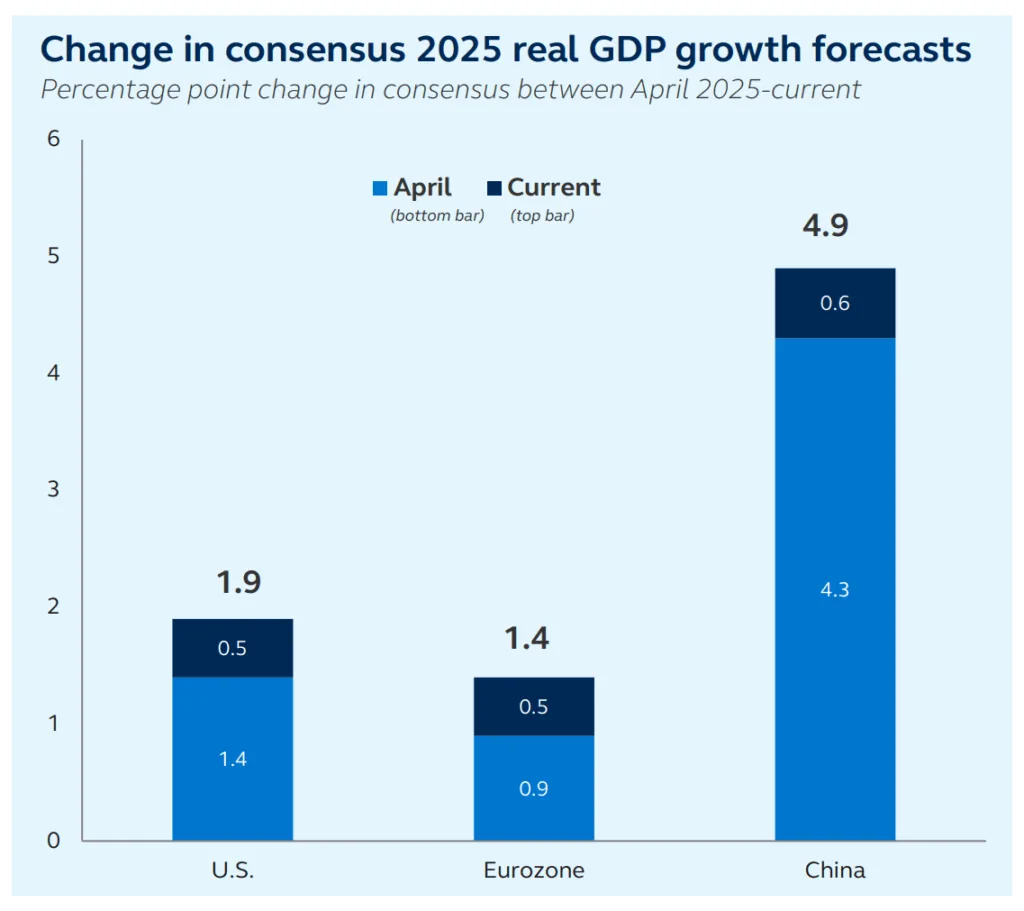
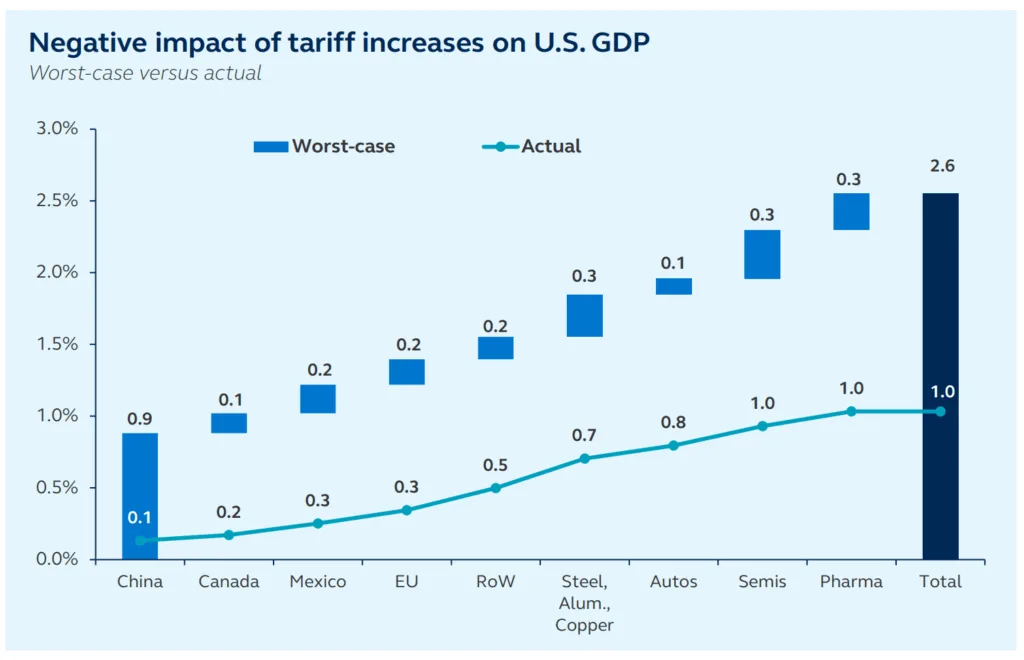
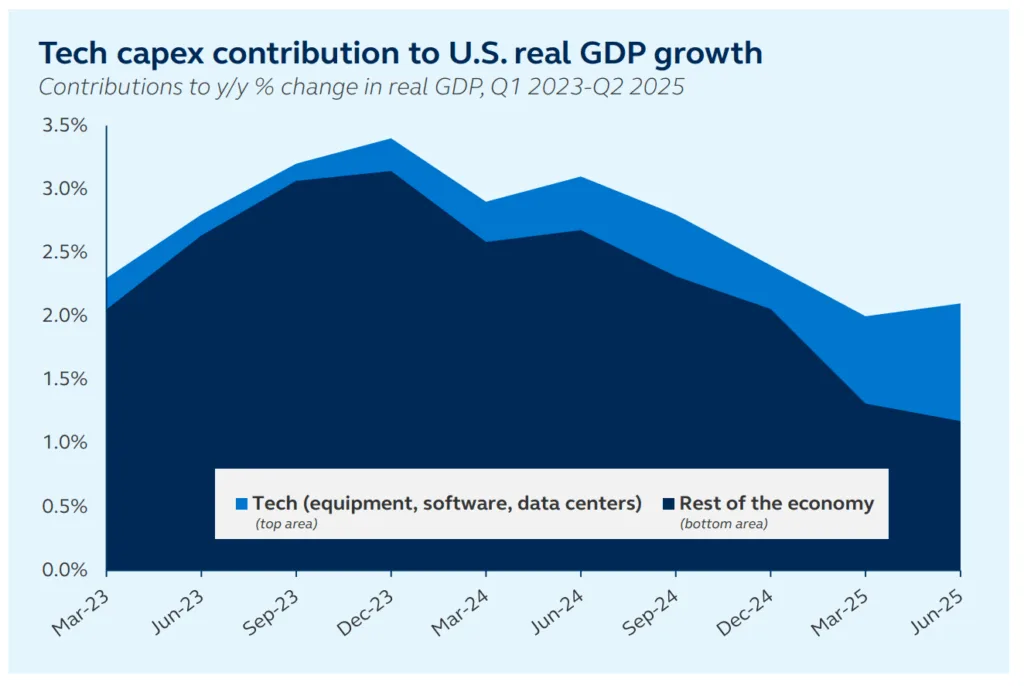
Principal Asset Management reports that despite geopolitical shocks, trade disruptions, and sticky inflation, the global economy proved more resilient than expected in 2025. Growth persisted, driven by strong consumer balance sheets, AI-driven capex, and adaptive policy. The US sits at the heart of this mixed macro environment—leading the rebound, yet carrying long-term fiscal and political vulnerabilities.
In commercial real estate (CRE), market signals are improving: credit markets are active again, REITs have rebounded by over 35% since 2023, and US transaction volumes rose 17% year-over-year in 2025. But warning signs linger: distress is climbing, cap rate compression is unlikely, and returns vary widely by sector.
Cycle Status: Recovery, But Not a Rising Tide
While CRE markets are clearly off their lows, not all assets are recovering equally. Public and private CRE returns show widening dispersion. Core funds are diverging in performance, and listed REITs are outperforming in some regions—particularly in Europe, where improving macro conditions and wide cap rates present opportunity.
Transaction activity suggests renewed confidence. US CRE deal volumes surged in 2025, while Europe is showing early signs of revival. Investor focus across the region has increasingly turned toward income-producing assets as valuations reset and fundamentals stabilize, especially in urban markets with strong tenant demand. Meanwhile, debt markets—both private and CMBS—have returned to growth, with origination volumes up 47% and credit conditions easing.
A Divergent Market Demands Precision
2026 will be shaped not by sweeping recoveries but by dispersion in performance. The top-quartile property markets have seen price gains of 10%+, while laggards remain stuck. This unevenness will reward alpha-focused strategies over passive exposure.
Structural shifts—including reshoring, energy transition, AI, migration trends, and tightening monetary policy—are reshaping demand drivers. For investors, this means pivoting toward sectors and geographies with secular tailwinds and stable fundamentals.
Sector Outlook: Where the Opportunities Lie
- High Conviction:
- Data Centers: Scarcity of power and surging AI demand make these assets critical, but caution is needed in speculative GenAI builds.
- Residential (US and Europe): Demand/supply mismatches, affordability pressures, and urban migration drive long-term opportunity.
- Selective Conviction:
- Industrial: Modern logistics assets outperform legacy stock.
- Healthcare: Senior housing and medical office show improving fundamentals.
- Retail: Open-air and necessity-based formats hold pricing power.
- Hotels (Europe): Repositioning neglected assets offers upside.
- Neutral:
- Student Housing: Resilient but more competitive; success depends on regional enrollment trends.
- European Healthcare: Improving fundamentals but varies across regions.
- Office: Stabilizing in select prime locations, but hybrid work limits full recovery.
- Caution:
- Life Sciences: Overbuilt, underfunded, and still correcting.
Debt vs Equity: Balanced but Shifting
CRE debt remains the preferred allocation for many investors. With capital markets re-opened and refinancing needs growing, private and public debt strategies offer strong risk-adjusted returns. CMBS issuance is expected to grow in 2026, while CRE CLO and SASB issuance expand.
Still, real estate equity—both public and private—is regaining appeal. Core strategies show signs of normalization, while REITs offer diversification away from overconcentrated mega-cap tech exposure and remain historically cheap on a relative valuation basis.
Get Smarter about what matters in CRE
Stay ahead of trends in commercial real estate with CRE Daily – the free newsletter delivering everything you need to start your day in just 5-minutes
What’s Next: Strategic Execution is Everything
The recovery in CRE is real—but it won’t be uniform. Investors will need to focus on the fundamentals: growing net operating income, managing costs, and targeting sectors where secular tailwinds align with local demand. Gone are the days of indiscriminate cap rate compression. In 2026, winners will be defined by their discipline and precision.
Whether navigating volatile macro conditions, complex structural shifts, or fragmented capital markets, CRE investors in 2026 are entering a new phase—one that rewards strategy over scale, insight over inertia.
Looking Ahead
As capital markets stabilize and selectivity drives performance, 2026 stands to be a strong vintage year for real estate—especially for investors prepared to lean into dispersion and act on conviction.