





There is a lot of noise in residential real estate right now.
Capital is selective, underwriting is tighter, and allocators are asking tougher questions about durability. In a recent webinar, Brad Johnson and Ian Fisher of Vintage Capital focused on one segment they know deeply: manufactured housing communities.
This session is a data-driven walkthrough of how the asset class behaves across cycles, what drives its operating profile, and where the real risks sit. Johnson brings an institutional acquisition background and built a 2,000 pad operating platform before partnering with Fisher. Together, they have been allocating in the space for years and walked through both performance data and operational realities.
The Business Model Drives the Outcome
The foundation of the discussion was simple. Operators control the land and infrastructure inside the community.
We are infrastructure owners really.
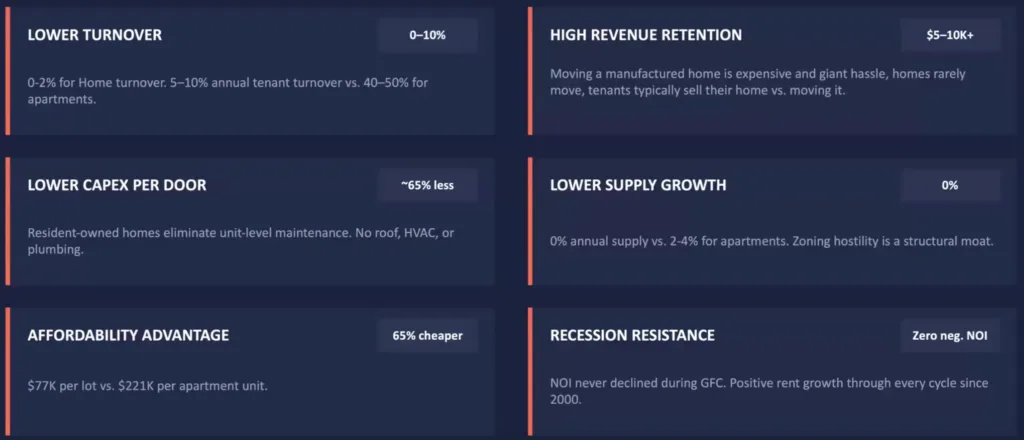
Operators typically own the roads, pads, and utility connections. Residents own their homes. Because of that setup, ongoing interior maintenance, appliance replacement, and many turnover costs sit with the homeowner, not the landlord. Expense ratios tend to reflect that structural difference, especially in parks where utilities are directly billed to residents.
This does not mean the asset class is capital light. Johnson was clear that older parks often require meaningful upfront investment. Roads, pipes, and common areas can suffer under long-term mom and pop ownership. Vintage often enters with a significant year one capex plan to stabilize infrastructure and improve curb appeal. The pipes might not need to be touched again for decades, but getting them right the first time is critical.
Stability Is the Core Theme
When the team walked through historical performance, the emphasis was on durability. Using public REIT data as a proxy for higher quality institutional assets, Johnson highlighted a statistic that caught the room’s attention.
There’s actually never been a negative year of NOI growth on the same store.
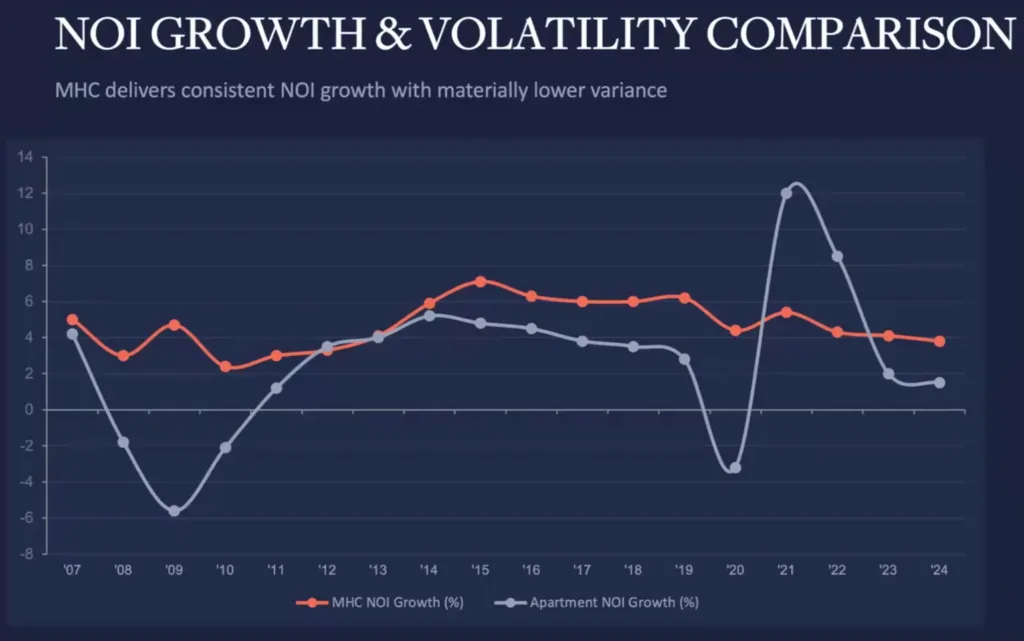
That long-term stability is central to the thesis. Rent growth tends to be steady rather than explosive. The model does not rely on outsized spikes. Instead, operators benefit from incremental increases layered on top of relatively stable expenses. Over time, that compounding effect becomes meaningful.
Johnson referenced Warren Buffett’s well known rule to frame the mindset.
Don’t lose money.
Avoiding major drawdowns, in their view, is what builds durable returns.
Supply and Regulatory Reality
Development remains limited. Zoning barriers, local opposition, and stigma restrict new projects in most markets. The team described annual new park development as a rounding error relative to the existing base of communities nationwide.
That said, they did not ignore political risk. Regulatory exposure varies by state. In certain blue markets, rent control discussions create uncertainty. Vintage’s approach has been to avoid markets where pricing regulatory outlier risk becomes too difficult and instead focus on business friendly or purple states where underwriting assumptions are clearer.
The message was practical. Regulation carries real financial consequences for manufactured owners and needs to be reflected clearly in underwriting from the start.
Residents and Retention
During Q&A, the conversation shifted to resident profile and delinquency. The typical tenant varies by market, from working families in affordable communities to retirees in 55 plus parks. Delinquency rates were described as modest, generally low single digits depending on asset quality.
Retention is a defining feature. Moving a manufactured home is expensive and complicated. In most cases, when a resident leaves, they sell the home in place. The operator sees a new name on the lot rent check, not a vacant pad and a renovation bill. That dynamic supports revenue continuity and lowers turnover friction.
Community standards are enforced through rules that resemble an HOA framework. If a home falls into disrepair, management escalates through notices and fees. Evictions are relatively rare in stronger markets because residents have significant equity tied up in their homes and strong incentive to remain current.
Portfolio Implications
We closed it off with allocation framing. For investors building residential exposure, manufactured housing offers a distinct operating profile grounded in infrastructure ownership, limited new supply, and high resident stickiness.
It is not a frictionless asset class. Transaction volume is limited, infrastructure requires active oversight, regulatory environments vary by state, and returns depend heavily on disciplined execution.
But for allocators focused on durability and long term compounding, the data and operating history presented in the session make a clear case.