



- Modular construction made up 8.8% of US apartment starts in 2024, showing its strongest adoption yet.rn
- A bipartisan Senate bill could modernize financing rules and clarify the difference between modular and manufactured housing.rn
- Developers like Resia, Greystar, and Ginosko are proving modular can cut costs, reduce waste, and deliver projects faster.rnrnrn
Modular Gains Ground
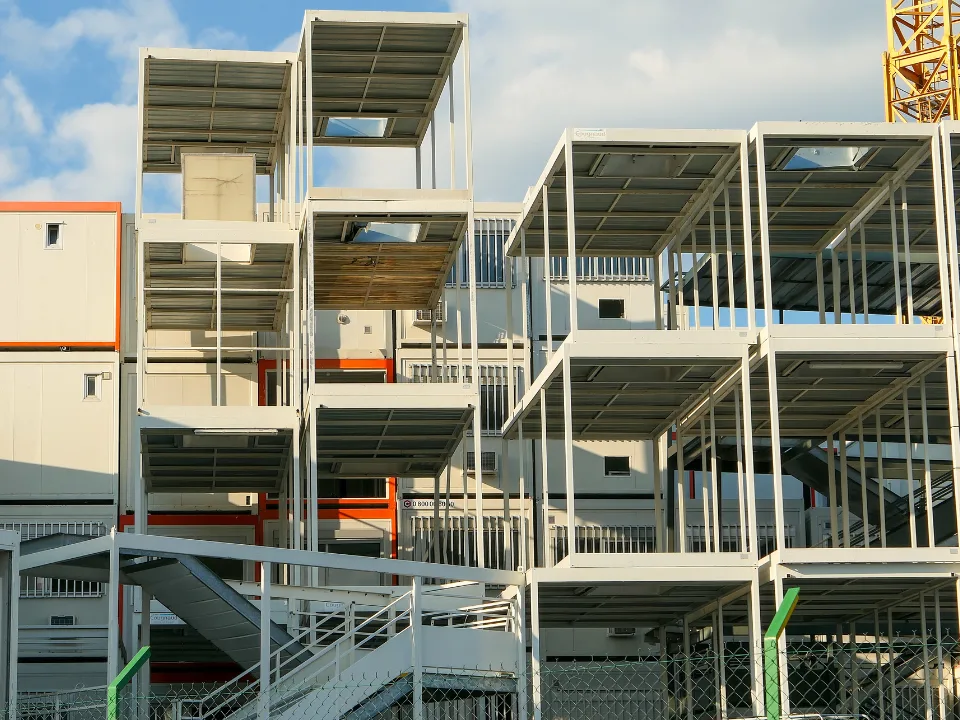
According to Bisnow, Resia’s newest Florida apartment complex opened with kitchens and bathrooms manufactured 500 miles away in Georgia. The project highlights modular’s growing role in housing. The Modular Building Institute reports modular construction accounted for 8.8% of US apartment starts in 2024.
Policy Push Could Speed Adoption
The Renewing Opportunity in the American Dream to Housing (ROAD) Act is now in the Senate. Sponsored by Sen. Tim Scott (R-SC), the bill directs hud to review lending rules that penalize modular projects, which often need bigger upfront funding. It also defines “modular construction” more clearly, separating it from manufactured housing, which falls under different rules.
Get Smarter about what matters in CRE
Stay ahead of trends in commercial real estate with CRE Daily – the free newsletter delivering everything you need to start your day in just 5-minutes
Developers Move In-House
Major developers are scaling modular. Greystar built its first modular project in Pennsylvania last year and has six more planned. Resia manufactures components at its Georgia factory. Ginosko Modular, based in Michigan, reports build costs at $73 per SF — about half the cost of traditional projects.
The benefits are hard to ignore. Greystar reports 40% faster delivery, 90% less waste, and 10% lower costs. Resia targets middle-income renters, using uniform room sizes to reduce complexity and improve affordability.
Shifting Perceptions
Challenges remain. Modular still suffers from confusion and skepticism, worsened by Katerra’s high-profile collapse in 2021. “Perception is the main barrier,” said Tom Hardiman, executive director of the Modular Building Institute. Advocates believe federal action could make lenders and developers more comfortable with the model.
Looking Ahead
Resia plans to sell its modular kitchens and bathrooms to other multifamily builders starting in 2026. The Modular Building Institute projects the multifamily modular market will grow from $7.1B in 2024 to $11.3B in 2029, an annual growth rate of 4.7%.
If the ROAD Act passes, industry leaders expect modular to move from niche to mainstream, reshaping how apartments are built in the US.