



- US multifamily rent growth slowed to 1.4% year-over-year in January 2026, down from 1.6% in December.
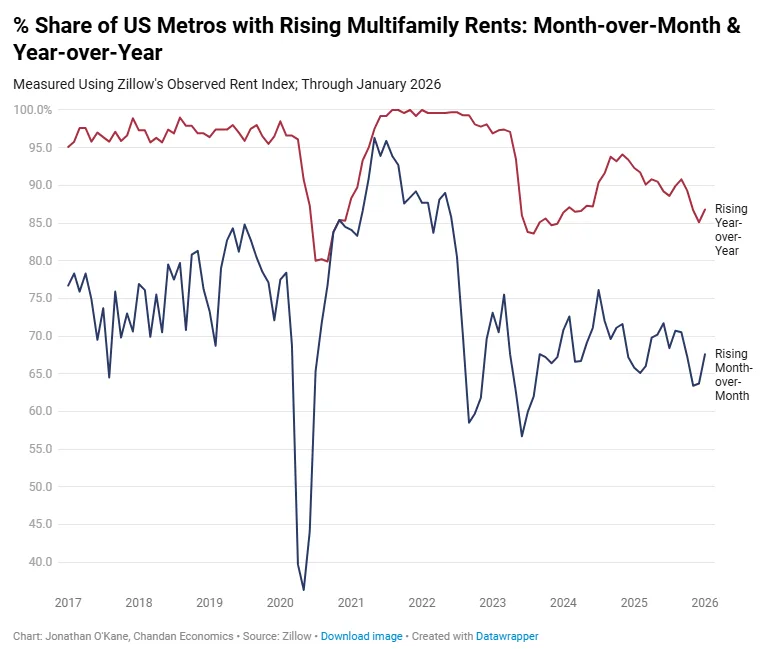
- 67.6% of US metros saw monthly rent increases, while 86.8% posted positive annual rent growth.
- Midwest and select coastal metros showed strongest rent gains; parts of Florida and Texas remained weak.
- Baton Rouge, Winston, and Little Rock led monthly rent gains; North Port and Tampa were among the weakest.
National Trends Show Slower Growth
Multifamily rent growth continued to moderate across the US in January 2026, according to the Zillow Observed Rent Index. National rents rose 1.4% year-over-year—a further slowdown from previous months. Chandan Economics reports that while rents are still climbing on an annual basis, the pace is well below post-pandemic highs recorded in 2021 and early 2022.
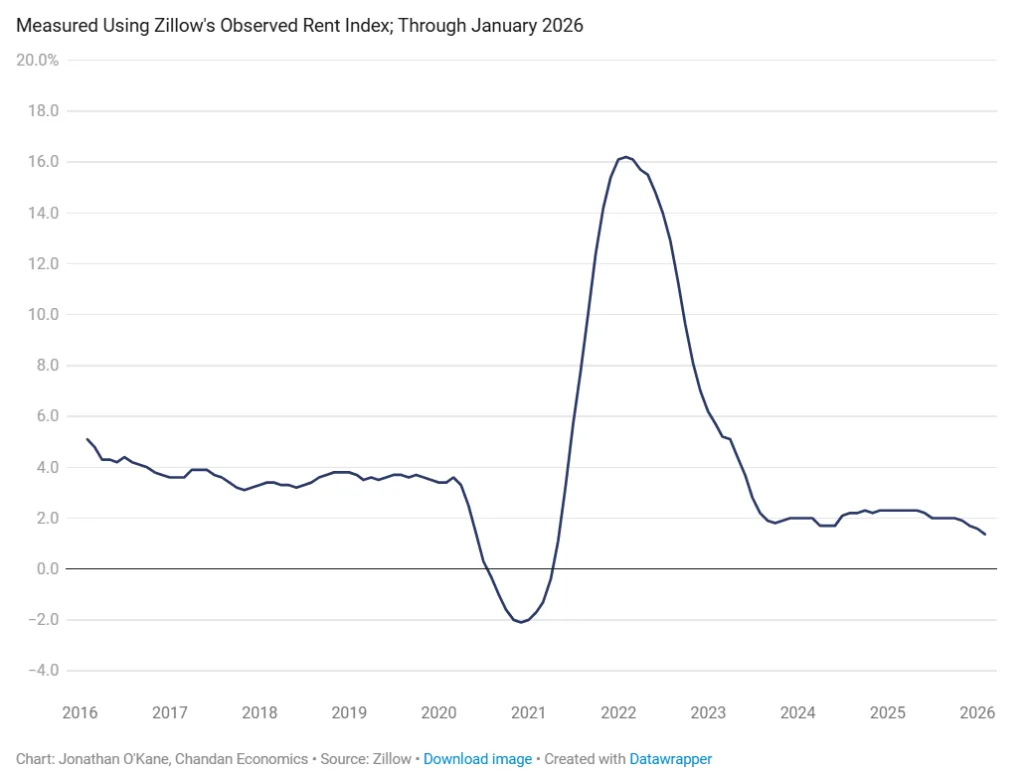
Rent growth breadth improved modestly. The proportion of metros with monthly rent gains increased to 67.6% in January, up from 63.7% in December. Annually, 86.8% of metros showed positive rent movement, but that remains lower than the near-universal growth seen during the peak rental surge.
Metro-Level Rent Growth Diverges
Metro-level performance varied widely. Florida and Texas markets continued to see rent declines, while several Midwest and coastal cities remained resilient. The uneven results follow several months of volatility in late 2025, including one of the sharpest monthly rent pullbacks in more than a decade, underscoring how quickly conditions have shifted across high-supply Sun Belt markets. The top five metros for annual multifamily rent growth in January 2026 were Virginia Beach (+6.06%), Chicago (+5.42%), San Francisco (+5.38%), Urban Honolulu (+5.30%), and Albany (+4.91%).
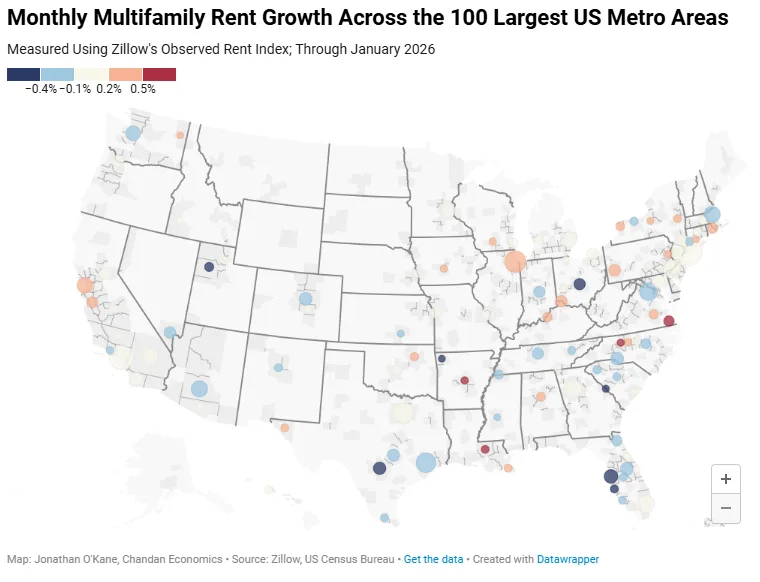
In contrast, Cape Coral (−5.38%), North Port (−4.31%), and Austin (−3.94%) posted the largest annual declines. On a monthly basis, Baton Rouge led the nation with a 0.86% rent increase. Winston followed closely at 0.85%, while Little Rock posted a 0.80% gain. Meanwhile, Fayetteville recorded the sharpest decline at 0.72%. North Port fell 0.59%, and Tampa dropped 0.52% for the month.
Normalization Continues
The latest data confirm continued normalization in multifamily rent growth. National gains keep decelerating, and most metros remain positive year-over-year. Metro-level results were mixed in January, with softness persisting in many Sun Belt and Mountain West markets, and stronger gains found in select Midwest and coastal areas.
Get Smarter about what matters in CRE
Stay ahead of trends in commercial real estate with CRE Daily – the free newsletter delivering everything you need to start your day in just 5-minutes