






- Private real estate debt and middle market direct lending offer complementary risk profiles and income streams.
- Combining these strategies can reduce volatility and improve yield stability in institutional portfolios.
- Both asset classes have grown as private credit expands and banks retrench from lending.
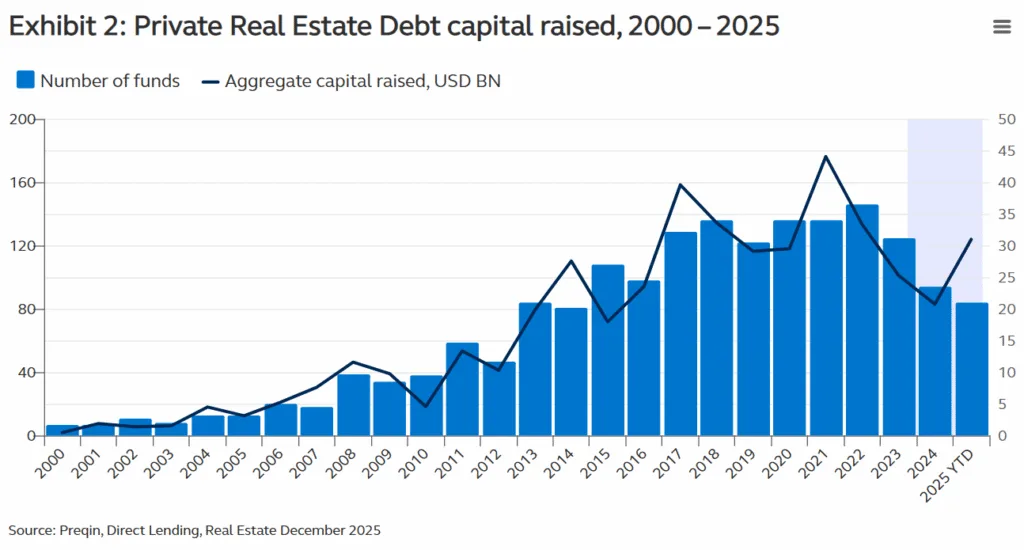
- Real estate debt saw a sharp rebound in 2025, raising $31B—the fifth highest level since 2000.
Portfolio Diversification through Private Real Estate Debt
Private real estate debt has become an important component for investors seeking portfolio diversification and stable income, according to Principal Asset Management. Institutional portfolios benefit by pairing real estate debt with corporate middle market direct lending, leveraging their low correlation and different risk drivers. Real estate debt is collateralized by tangible properties while direct lending targets corporate cash flows, providing natural diversification.
Growth of Private Credit Strategies
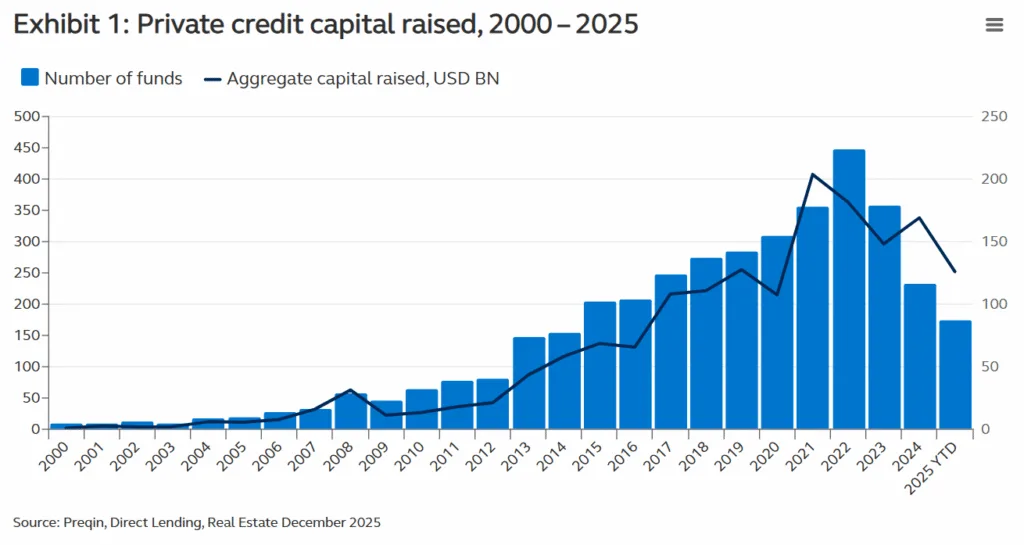
The private credit market, including both middle market direct lending and real estate debt, has expanded in recent years. Direct lending remains the largest private credit strategy by AUM. Major alternative asset managers have continued scaling their private lending platforms to record levels, underscoring institutional demand for nonbank financing solutions. Real estate debt, once less prominent, has emerged as investors pursue collateral-backed income sources. In 2025, the sector achieved a $31B capital raise—its fifth highest on record—reflecting renewed investor interest.
Why the Combination Matters
Both private real estate debt and direct lending typically feature floating-rate, senior-secured positions, but their differing income sources help balance risk. Analysis indicates that the combination reduces portfolio volatility while delivering attractive yields. With banks pulling back from direct lending, both asset classes are positioned as resilient and productive alternatives for institutional strategies.
A Strategic Portfolio Allocation
Investors are increasingly viewing private real estate debt as a complementary allocation within private credit. The sector offers capital preservation and income resilience alongside direct lending exposure. As asset class transparency improves and deal flow increases, pairing these strategies remains an effective approach for navigating shifting capital markets.
Get Smarter about what matters in CRE
Stay ahead of trends in commercial real estate with CRE Daily – the free newsletter delivering everything you need to start your day in just 5-minutes