




- Momentum is building behind new rent control policies in major metros, with New York City at the forefront following a mayoral campaign centered on a citywide rent freeze.
- Regulated multifamily properties are under increasing financial strain as operating costs—insurance, utilities, labor—outpace rent growth, leading to higher delinquencies and reduced margins.
- Cap rates for rent-stabilized buildings have risen sharply, reflecting valuation declines and investor uncertainty, while market-rate multifamily has remained more resilient.
- New regulatory proposals like COPA and vacancy reset reform are adding complexity to transactions and underwriting, with broader implications for housing finance.
Rent Control Momentum Spreads Beyond New York
Following NYC’s mayoral election, the debate around rent regulation has gained traction across several large metros, reports Trepp. Cities like Los Angeles, Washington, DC, Seattle, Montgomery County (MD), and Saint Paul are exploring tenant-focused policies. These include rent caps, vacancy control rules, and first-purchase rights for nonprofits and tenants.
These discussions come as multifamily operators face mounting pressures from rising expenses and tighter regulatory frameworks. The intersection of policy and economics is becoming harder to ignore.
Data Highlights Diverging Performance Trends
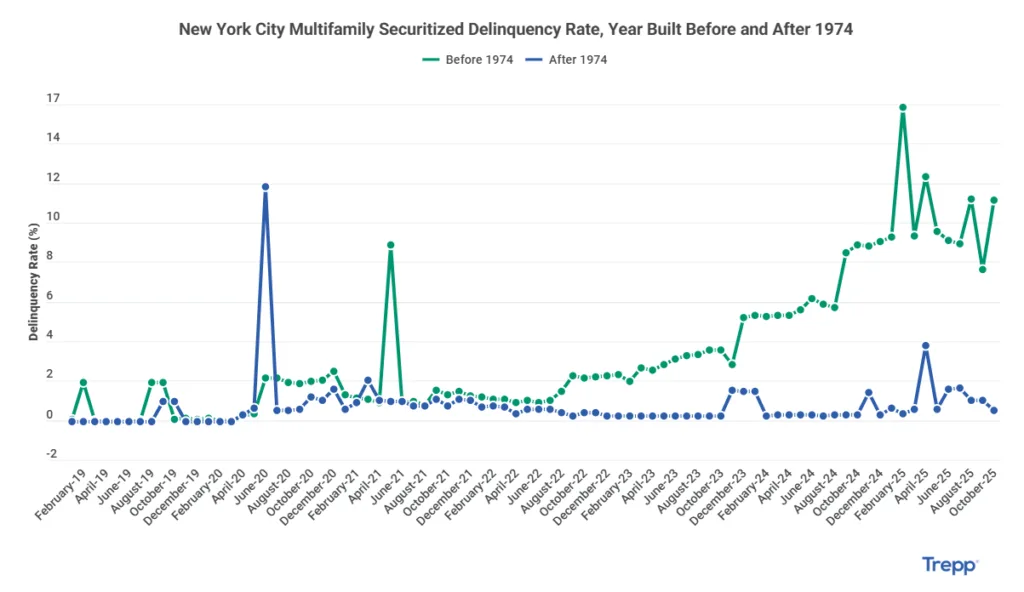
Trepp’s latest securitized loan data reveals a growing performance divide between market-rate and regulated multifamily assets. National delinquency recently climbed above 7%, its highest level in nearly a decade. The increase is largely driven by older, rent-stabilized properties that can’t raise rents quickly enough to keep up with rising costs.
In New York City, rent-stabilized delinquencies have averaged 5.4% since 2022 and reached 10.8% year-to-date, compared to just 0.7% for market-rate properties. For many stabilized buildings, operating costs alone often exceed rent income—creating scenarios where owners are financially disincentivized from leasing.
Get Smarter about what matters in CRE
Stay ahead of trends in commercial real estate with CRE Daily – the free newsletter delivering everything you need to start your day in just 5-minutes
Cap Rates And Valuations Reflect Regulatory Strain
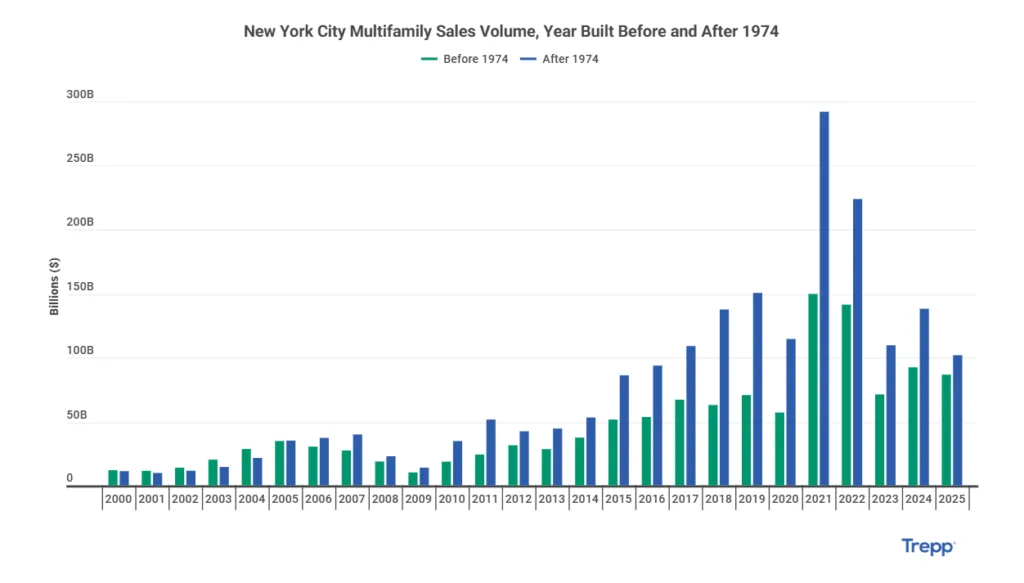
Valuations for stabilized buildings have dropped significantly since major rent reform laws passed in 2019. Prior to those changes, cap rates for rent-stabilized assets were around 3%. Today, they often exceed 9%, driven by expense inflation and regulatory risk.
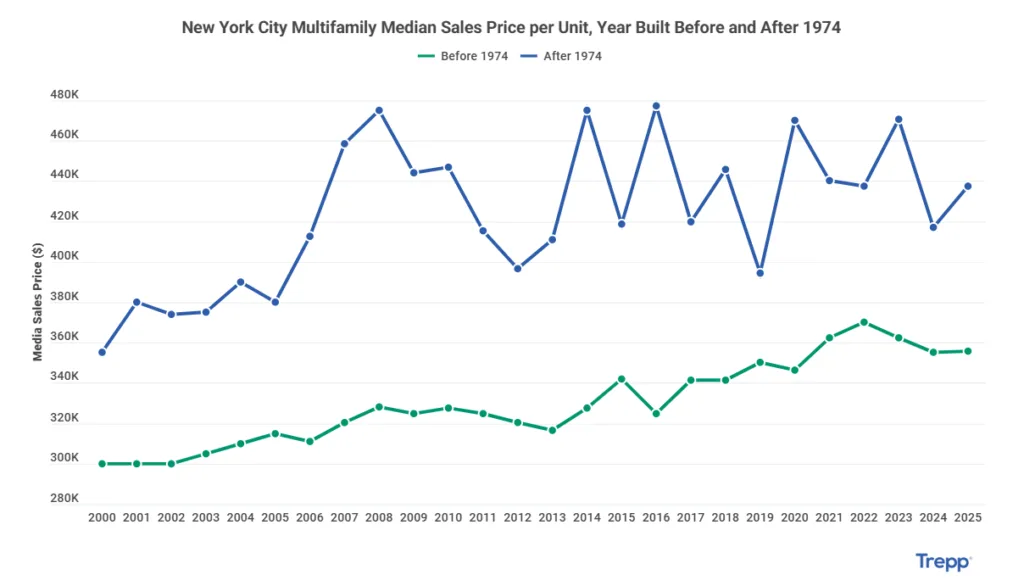
This repricing has also impacted transaction volume. Market-rate buildings continue to attract capital, while stabilized properties are more frequently purchased by mission-driven investors or operators with specialized expertise. Since 2019, market-rate property values have grown 1.75% annually, reaching a median $438K per unit, while stabilized units have increased just 0.27%, to $356K per unit.
New Policies Add Layers Of Complexity
Beyond rent caps, emerging policy proposals are raising new questions for owners and investors:
- Vacancy Reset Litigation: A legal challenge aims to allow rent resets on long-vacant units, which in some cases haven’t been updated in decades—leaving apartments financially unviable to renovate and lease.
- Community Opportunity to Purchase Act (COPA): Proposed legislation in New York and similar proposals elsewhere would give nonprofits or tenant groups a chance to buy properties before they hit the open market. While aimed at preserving affordability, these laws could lengthen sale timelines and complicate underwriting.
Such policies are being closely watched by investors and lenders for their potential to affect liquidity and deal structures in regulated multifamily.
Outlook For CRE Finance
As rent regulations tighten and costs continue to climb, operators and capital providers are paying close attention to how these factors influence asset performance. Key trends to watch:
- NOI Compression: Expenses are growing faster than revenues in regulated buildings, narrowing margins and increasing risk.
- Delinquency Gap: Regulated assets are underperforming their market-rate counterparts, especially in older building stock.
- Transaction Headwinds: Policy uncertainty and ownership restrictions may slow deal flow and reduce valuations in rent-controlled markets.
Conclusion
New York may be leading the conversation on rent policy. However, rising costs, affordability concerns, and regulatory complexity are emerging nationwide. For investors, lenders, and developers, understanding multifamily regulation is increasingly essential. It helps navigate performance risk and identify opportunities.