



- Self storage conversions now account for 10% of total US inventory, with over 179M SF completed.
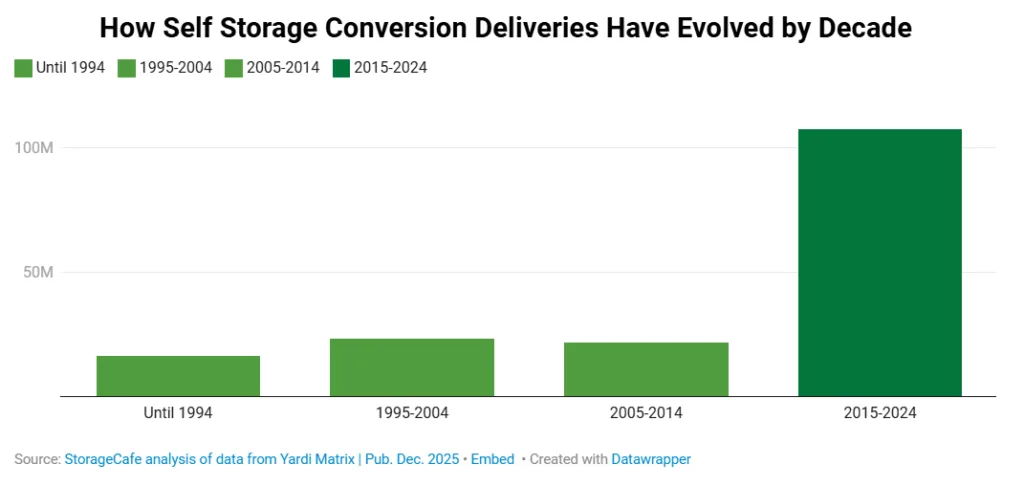
- More than half of all converted self storage space was delivered in the last decade.
- Sunbelt and Northeast cities are experiencing the fastest growth in adaptive reuse projects.
- Conversions provide cost savings, urban revitalization, and sustainability benefits over ground-up development.
Nationwide Adaptive Reuse Surge
StorageCafe reports that self storage conversions have become a key growth strategy across the US, transforming underutilized commercial properties into modern storage facilities. Roughly 179M SF of storage space, about 10% of national inventory, comes from adaptive reuse projects. In the past decade alone, more than 108M SF was delivered—showing the accelerating pace of conversions.
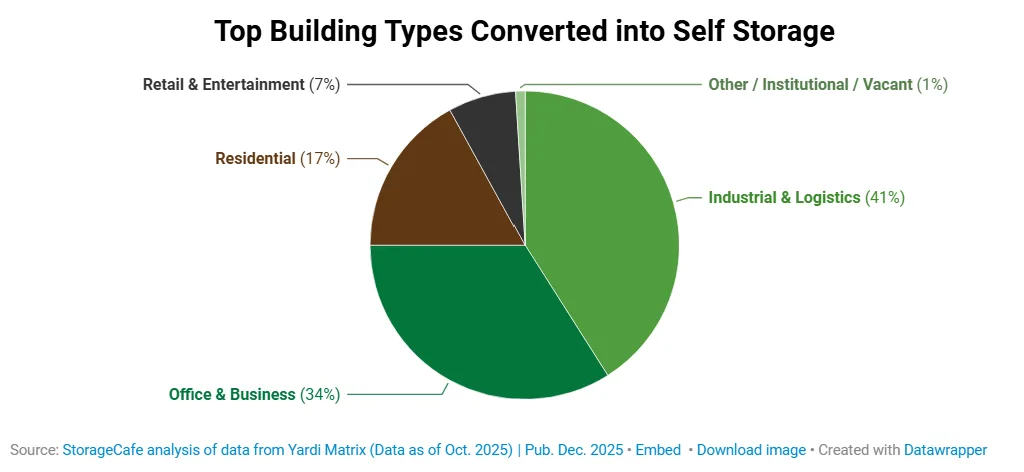
These projects repurpose former industrial, office, residential, and retail buildings, especially in land-constrained or highly regulated markets. Industrial properties account for 41% of conversions, offices contribute 34%, and residential buildings add 17%, while developers increasingly pursue retail conversions amid ongoing store closures.
Regional Leaders and Hotspots
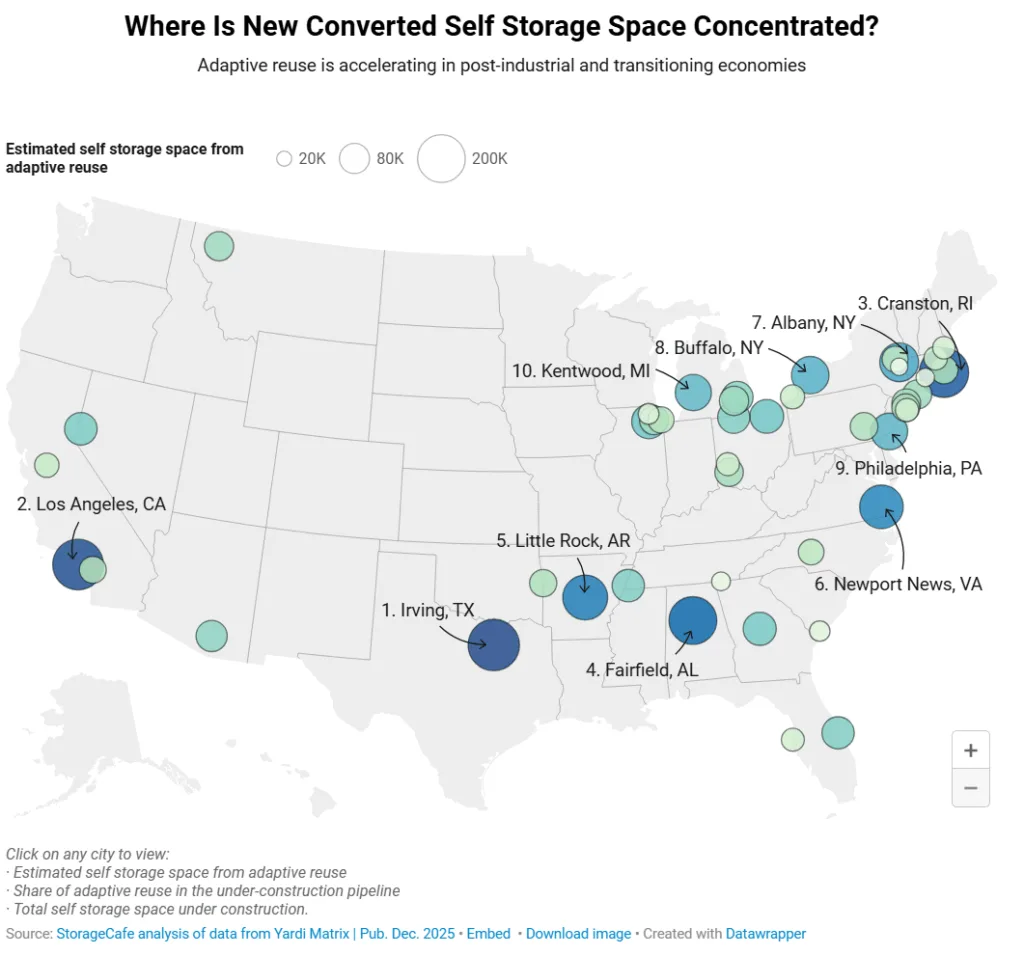
The Sunbelt and Northeast are notable self storage conversion leaders. Irving, TX is set to deliver the most adaptive reuse space under construction, with 233K SF in the pipeline. Los Angeles, Cranston, and Fairfield also stand out for both project volume and the proportion of local supply coming from conversions.
32 US cities have their entire new self storage pipeline made up of conversion projects. Urban areas like Chicago, Brooklyn, Philadelphia, and Manhattan rely on conversions for over a third of their total inventory, reflecting the impact of land scarcity and strict zoning.
Supply Gaps and Market Impact
Many top markets for self storage conversions remain undersupplied. Storage per capita ranges from just 1.2 SF in Cranston to 6.8 SF in Irving—often below the national benchmark. Adaptive reuse addresses rising demand, limited land, and high construction costs. It fills supply gaps while avoiding the disruption of ground-up development. The strategy has proven especially effective in urban areas, where vacant or obsolete buildings are being reimagined as modern storage hubs. This helps markets adapt to shifting commercial needs.
Conversions also support local economies—20% of new projects are located in opportunity zones, aligning with community and redevelopment goals. On average, adapted facilities rent for 4–17% less than new builds, delivering pricing advantages to customers.
Sustainability and Cost Benefits
Self storage conversions deliver notable sustainability gains by preventing demolition waste and repurposing materials. Los Angeles will avoid roughly 29,000 tons of rubble through current projects. Nationwide, savings in construction time and costs (often 37–50% less per PSF than new builds) are drawing more developers to adaptive reuse, according to industry experts.
What’s Driving Conversions
Traditional office, retail, and industrial assets are facing high vacancy rates or becoming obsolete. In response, adaptive reuse offers a practical solution for property owners and cities. Success depends on factors like market demand, supply balance, building suitability, zoning approvals, and accurate cost estimates.
Industry analysts expect the pace of self storage conversions to stay strong. Economic shifts, remote work, and a growing focus on revitalization and sustainability are all driving the trend. As cities adjust to changing commercial needs, conversions are set to play a larger role in meeting demand for space and community renewal.
Get Smarter about what matters in CRE
Stay ahead of trends in commercial real estate with CRE Daily – the free newsletter delivering everything you need to start your day in just 5-minutes